Restoring the Santiam Canyon
Conservation in Action
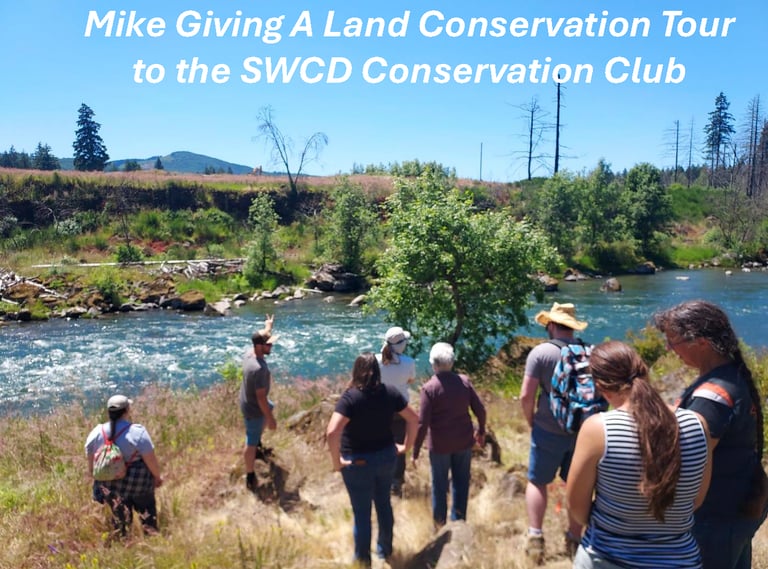
This June, Marion SWCD hosted a Conservation Club event for lifelong learners to join together for a day on the river to hear about riparian restoration management from the landowners themselves. While the river was still flowing high and the native flowers were blooming, we explored a range of riparian restoration practices at a large and a small site along the North Santiam River.
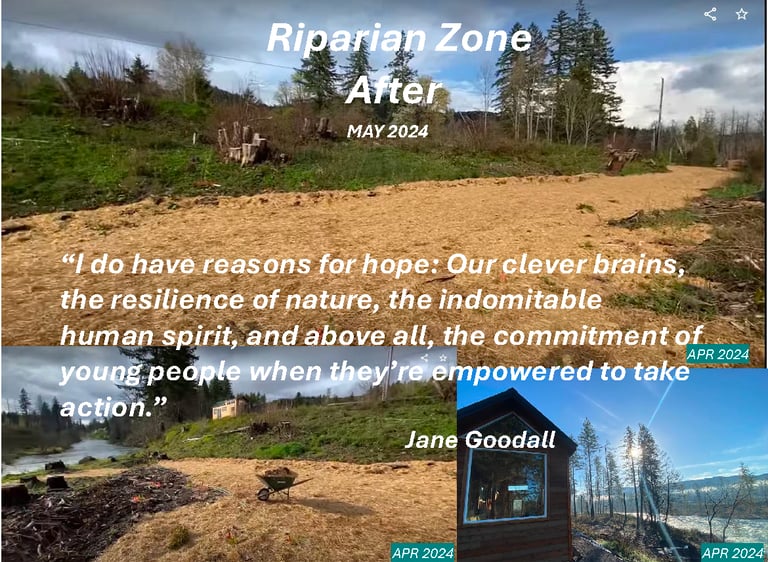
The next site for our Conservation Club tour led us down Highway 22, into the burn area from the 2020 Labor Day wildfires. This site was at a private landowner’s family property along the North Santiam River in Lyons. The Hebings greeted all of the tour attendees with big smiles, happy to share their beautiful home with us. Mike shared sun tea he brewed himself to keep us refreshed as we walked the restoration site and admired all of the beautiful native flowers in bloom.
Hebing Family Property
The project area was about 5 acres total, and had quite a different journey of conservation, due to the impacts from the natural disaster. Mike is not new to conservation, having completed wildlife habitat enhancement projects and conservation farming practices before the fires. Despite the unfortunate loss of those efforts and projects in the wildfires, Mike’s determination, along with his Uncle Mark, helped ensure his Grandparent's (Phil and JoAnn Hebing) land and legacy remains strong.
Wildfire Damage
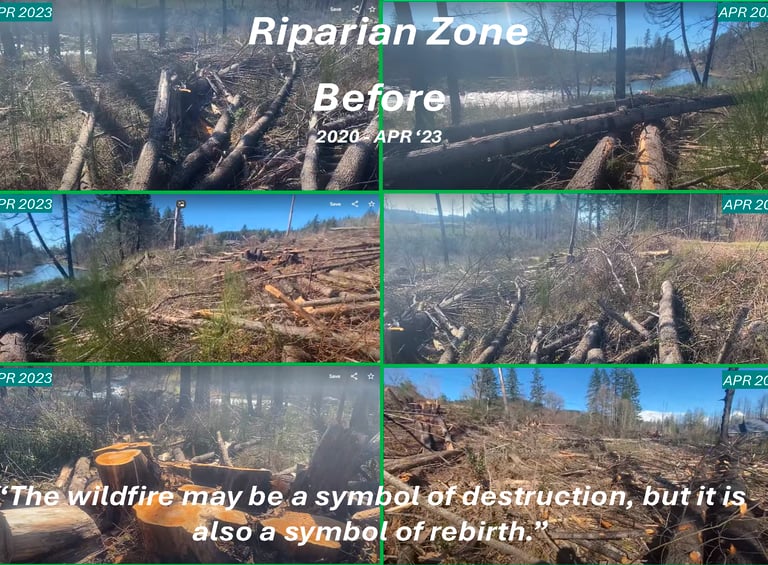
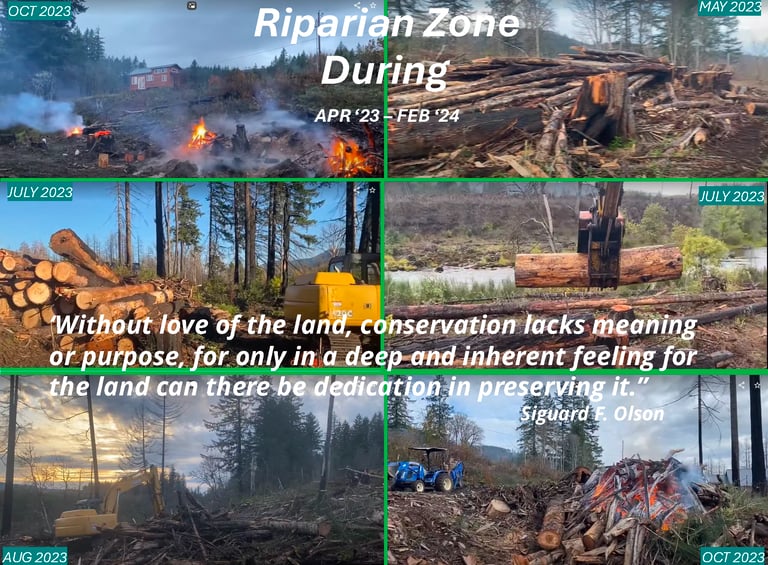
The wildfires burned through the entire Hebing family property, sparing some of the structures due to the Mike and his brother dave's’ fast action to put out the sprinklers around the homes and on roofs. However, the native plant community was lost and left a huge mess behind for the Hebings to clean up. What was once dense old growth forest, was now scorched trees left standing and piled up in huge piles, creating dangerous hazards. This also opened up the canopy to sunlight that hadn’t reached the forest floor in decades, and triggered a previously dormant seed bed of Scotch broom. If you’ve been into the burn area at all since the fires, especially during April – June, all you will see in the burned forests is a sea of yellow flowers. This is the invasive Scotch broom taking over the understory, inhibiting native plants from growing.
Support for Restoration Efforts
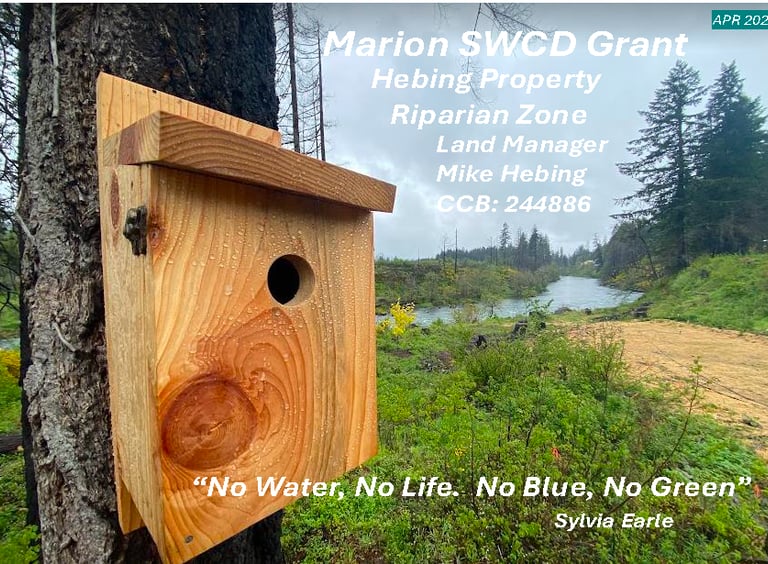
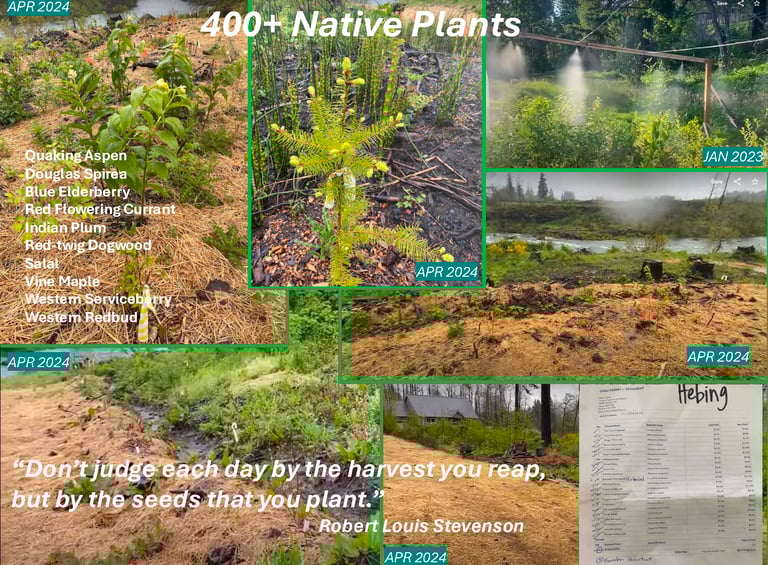
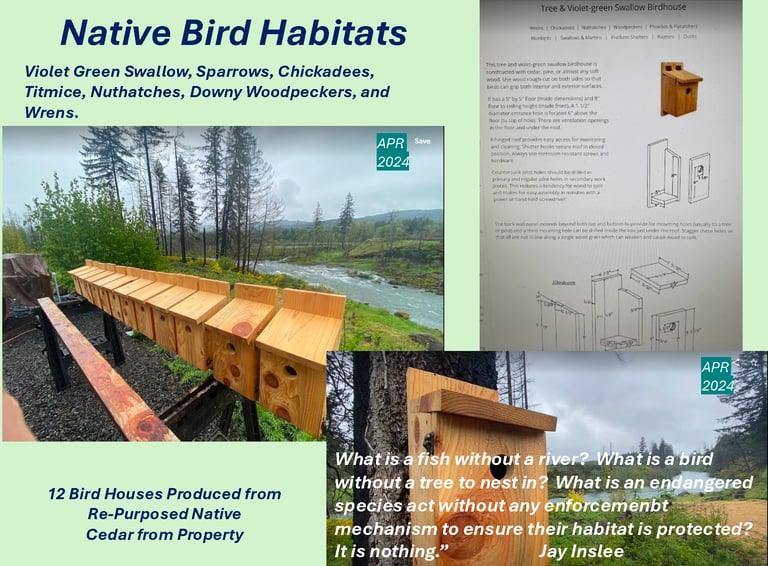
Mike Hebing received a Conservation Assistance Grant and completed a restoration project for his family’s property to remove the woody slash left on site, remove the invasive scotch broom, plant native species, build habitat brush piles and install bird houses (made from salvaged timber from his site) to help recover some of the lost wildlife habitat. Luckily, having professional experience with land clearing and tree work as his job, Mike was able to complete all of the labor himself and count that as his match to receive grant funds
Wildlife Viewing
We enjoyed the beautiful view of the river and learning about the native plants that Mike had planted, as well as the natural regeneration of plants that many of us didn’t expect to see, such as the Cascade Lily (Lilium washingtonianum Kellogg). We even watched ospreys and a bald eagle flying right over our heads, which put the cherry on top of an amazing day.
Resourcefulness
Restoration projects can add up quickly and be quite expensive, especially for a small landowner who has already lost so much to a natural disaster. However, Mike was able to be resourceful and look for free plant giveaways from partnering agencies at the end of planting season and home them in his nursery with irrigation over the summer. He received leftover native willows, Red Osier dogwood, and Douglas fir bareroots and potted them. Making sure he kept them watered over the summer, Mike kept the plants alive so he can plant them in his site at the proper time during the winter.
SWCD Blog
See full article: Conservation Club: Large and Small Scale Riparian Restoration (Chelsea Blank | July 17, 2024)
https://www.marionswcd.net/conservation-club-riparian-restoration/
Dedicated to the resilience and beauty of the North Santiam Canyon, Mike Hebing combines technical tree expertise with a commitment to long-term sustainability. By balancing the removal of invasive species with the strategic reintroduction of native flora, Mike can maintain your land’s unique biozone for a healthier ecosystem. From fire safety to grant-funded restoration, Mike provides the professional stewardship needed to protect and enhance your property for the future.
Oregon Contractor's Board (CCB) License: CCB#: 244886 ~ Exp 7/20/2027
Preferred Contractors Insurance Company ($1M/$2M): PCCM02-2025-03077 ~ Exp 8/19/2027
Bond: North River Insurance Company: ($25K): 36-CF740247 ~ Exp 9/2027
Oregon Secretary of State Business Registry Registry #: 2119631-94 ~ Exp 7/17/2027
413015840
Call
(808) 372-9100
© 2025. All rights reserved.
Registered with Secretary of State and Oregon CCB as Hebing, LLC
LLC is co-owned by Mike Hebing and Brad Hebing
address
25862 DeWitt Ln SE, Lyons, OR 97358